Quick answer: Today, focused shock wave therapy has a clear role in small animal practice. Focused extracorporeal shock wave therapy (f-ESWT) is now widely used in canine and feline medicine for tendon and ligament injuries, osteoarthritis, post-operative recovery, wound healing, and chronic pain. Quiet, comfortable treatments and portable handheld units make f-ESWT practical in the small animal environment.
Key takeaways
- Published canine data show good to excellent outcomes in most dogs with shoulder tendinopathy.
- Osteoarthritis is common and underdiagnosed in dogs and cats, so the potential caseload is large.
- Handheld, battery-powered units remove the space and cost barriers that have kept shock wave therapy out of many small-animal practices.
Where did the idea that shock wave is an equine therapy come from?
Much of the early veterinary shock-wave work was conducted in horses. dvm360 proceedings on equine shock wave therapy report outcomes such as about 80% success in nonunion fractures and 61.8% of forelimb suspensory ligament cases returning to full work at 6 months. Controlled research followed, including an AJVR study of experimentally induced osteoarthritis in horses that found less lameness with shock wave therapy than with placebo.
Large, costly generators were suited to equine referral centers, so small-animal practices tended to see shock wave as a form of equine therapy. In the video above, Dr. Tom Walsh calls that a completely outdated myth.
Which small animal conditions is focused shock wave therapy used for?
Tendon and ligament injuries. Shoulder tendinopathy is one of the best-studied conditions in canine medicine. A dvm360 review of shock-wave evidence reports good or excellent outcomes in 85% of dogs with shoulder tendinopathy. The 2013 Clinician’s Brief review reports improvement in 88% of dogs with soft-tissue shoulder lameness, without surgery.
Osteoarthritis. The Clinician’s Brief review reports that shock wave therapy improved lameness from elbow osteoarthritis about as much as NSAID therapy. The dvm360 review notes that gains in hip osteoarthritis were clear at 3 months but faded by 6 months. That is why many protocols include periodic rescue treatments.
Post-operative recovery. The same dvm360 review reports significantly higher bone-healing scores at 8 weeks after TPLO. It also cites complete union at 12 weeks in treated radial nonunions, while 80% of controls remained nonunited. Curative Sound’s own sham-controlled TPLO recovery trial found significantly greater clinical improvement at a trot by 4 weeks in treated dogs.
Wound healing and chronic pain. Clinician’s Brief describes the wound-healing evidence as early and largely experimental, with weekly treatments that may extend beyond three sessions. For chronic musculoskeletal pain, shock wave therapy is increasingly part of multimodal plans.
How big is the small animal caseload?
Larger than most practices realize, particularly for osteoarthritis:
- A dvm360 expert panel on osteoarthritis prevalence estimated that 40% to 50% of dogs have clinical OA.
- The same panel estimated that 40% to 50% of cats over 10 years old show clinical OA pain.
- Today’s Veterinary Practice reports that 90% of cats over 12 had radiographic evidence of OA, yet arthritis was documented in only 4% of their records.
Most published shock wave outcome data comes from dogs. Feline use applies the same principles to a population where OA is common and often missed.
What does the evidence say overall?
A Today’s Veterinary Practice review of rehabilitation modalities describes shock wave therapy as having perhaps the strongest evidence of the rehabilitation modalities it covers. That evidence is still maturing: the 2025 Veterinary Practice News overview cites a 2022 systematic review that rated the overall evidence for horses, dogs, and cats as weak. Better-controlled trials, such as the TPLO study above, are adding to the canine literature.
Why does portability matter for small animal practice?
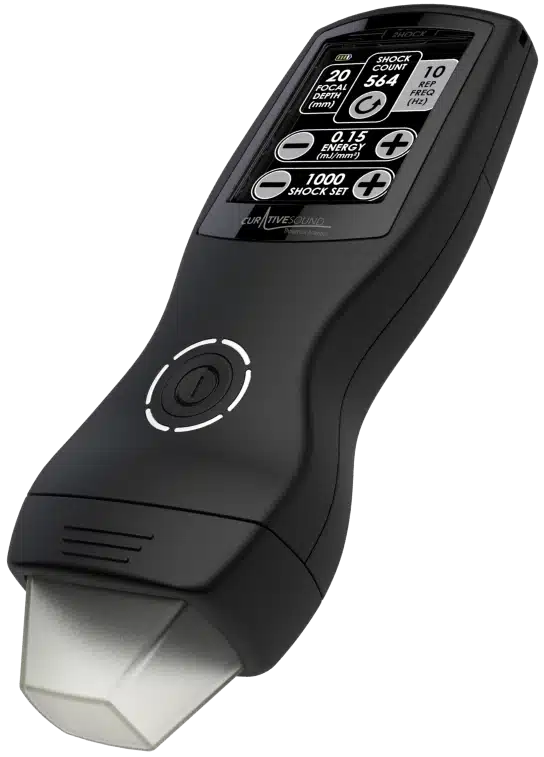
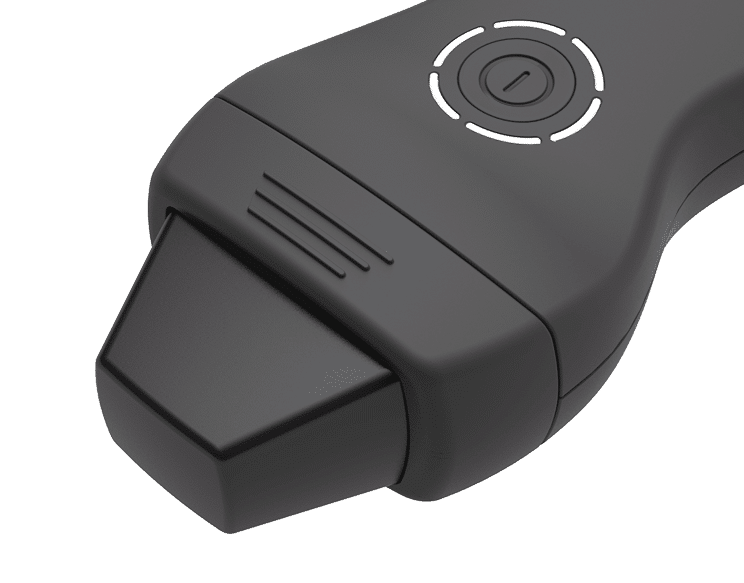
Dr. Walsh’s last point in the video is practical. Portable handheld units make shock wave therapy workable for any practice. The CS-Pro VET weighs 14.5 ounces, runs on swappable batteries, and delivers up to 100,000 shocks per charge. It can move between exam rooms, go cage-side, or travel on farm calls, with no dedicated room or cart needed. To see the full range of uses, download the 8 Shock Wave Applications eBook.
See the CS-Pro VET in your practice. Handheld, battery-powered focused shock wave therapy for small animal and equine patients.