Quick answer: Sedation became standard with early high-energy shock wave units, but it isn’t a requirement of the therapy itself. With a focused design and the right acoustic profile, most small-animal patients tolerate focused shock wave therapy while awake and comfortable.
Key takeaways
- Older shock wave protocols called for sedation because the units were loud and the treatment could be acutely painful.
- Progressions in technology have largely eliminated the need for general anesthesia in small-animal shock wave therapy.
- Skipping sedation matters most for the patients who need shock wave therapy most: senior dogs, small breeds, and patients with higher ASA status.
Why did shock wave therapy used to require sedation?
The sedation myth has a real history behind it. A 2013 Clinician’s Brief review of shock wave therapy described the treatment as loud and acutely painful enough that sedation was required, and it listed tramadol and deracoxib for pain control afterward. A dvm360 proceedings paper on shock wave therapy for osteoarthritis from the same era described sedating dogs with dexmedetomidine and butorphanol for every session.
Many veterinarians trained during that period still picture shock wave therapy as an anesthesia event. Coverage of rehab equipment trends in Veterinary Practice News described those older units as needing short anesthetic episodes of about 5 to 10 minutes per treatment.
What changed?
The equipment did. A 2025 Veterinary Practice News overview of ESWT notes that changes in equipment and energy protocols have largely removed the need for general anesthesia. Two design choices account for most of that change: a focused, piezoelectric energy source and an acoustic profile tuned for patient comfort.
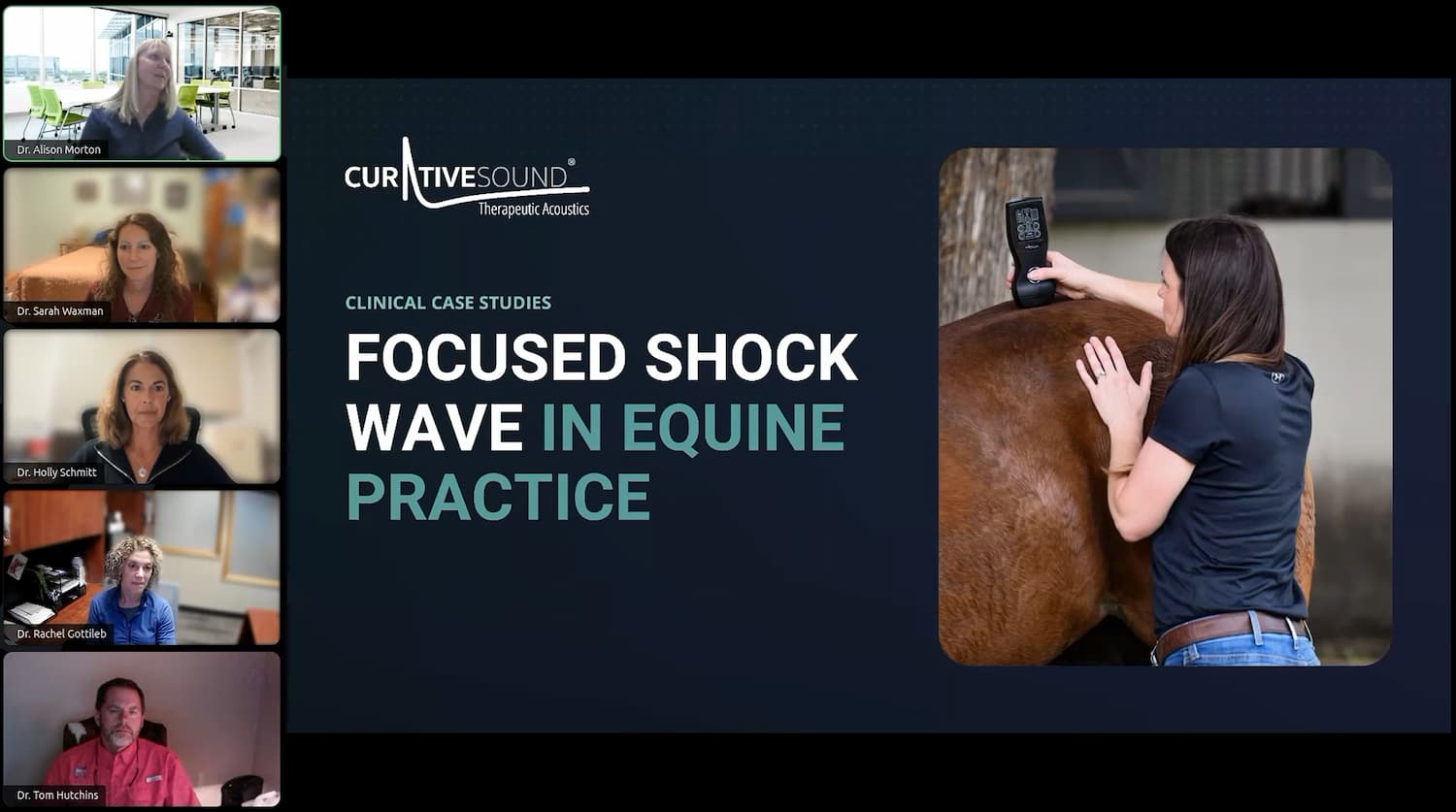
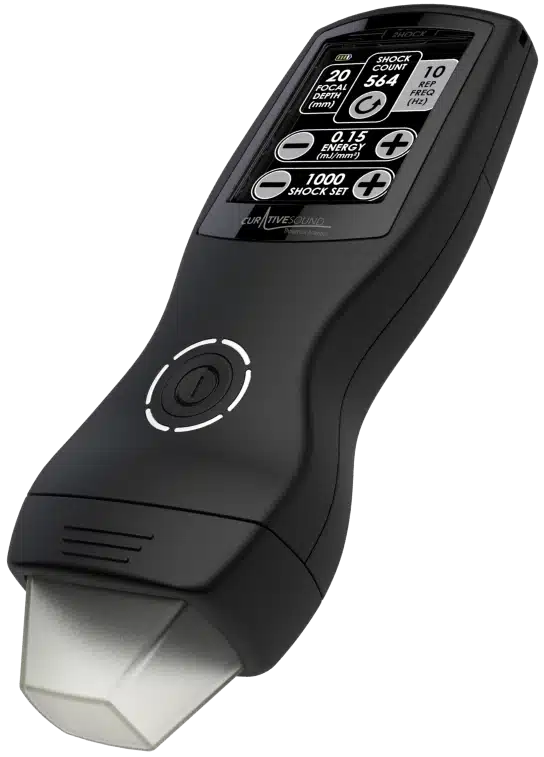
In the video above, Dr. Tom Walsh explains that with the right acoustic profile and a focused design, most of his patients tolerate treatment comfortably with zero sedation. The battery-powered CS-Pro VET was built around that idea. The CS-Pro VET canine protocol states that sedation is rarely required. In a blinded, randomized, sham-controlled trial of dogs recovering from TPLO surgery, 30 dogs were treated with no sedation.
Why does avoiding sedation matter so much?
Think about who typically needs shock wave therapy: older dogs with osteoarthritis, patients with chronic joint pain, and patients with other health conditions. These are the same groups at the highest risk for anesthesia.
In a large JAVMA study of anesthetic-related deaths in dogs, researchers reviewed 148 anesthetic-related deaths and found that:
- Dogs 12 years and older had about 7 times the odds of anesthetic-related death.
- Dogs under 5 kg had about 7.7 times the odds.
- Each step up in ASA physical status raised the odds about 6.6-fold.
- Sedation with injectable agents carried similar odds to anesthesia maintained with isoflurane.
Treating awake removes that anesthetic risk from the visit. It also simplifies the visit. You don’t need to fast the patient, monitor a recovery, or ask the owner to leave. Without the sedation cost and recovery time, a full course of treatment is also easier for clients to commit to.
Is sedation ever still needed?
Sometimes. A fractious patient, a very painful area, or an anxious animal may still benefit from light sedation, and that is a clinical call. The CS-Pro VET canine protocol advises lowering the pulse repetition rate (PRR) and then the energy flux density (EFD) if a patient shows discomfort, rather than pushing through pain.
See the CS-Pro VET in your practice. Handheld, battery-powered focused shock wave therapy for small animal and equine patients.